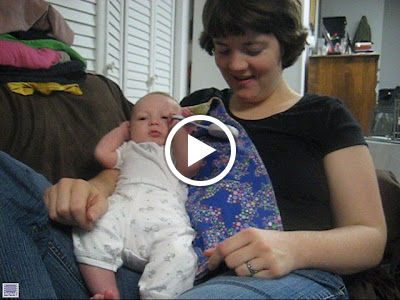
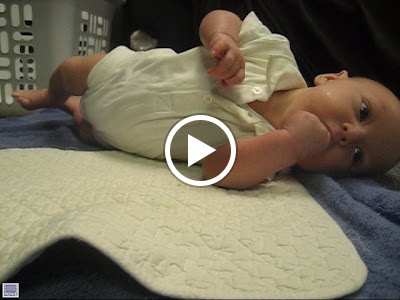
How many people actually look much at their Explanations of Benefits? With a new baby in the house, we've racked up quite a number of them in the filing drawer, so I thought I'd do a quick tally. (Thank goodness for Excel!)
Without question, this has been the most expensive year for healthcare that we've ever had. Since all this pre-natal care began right at the start of the year, it actually gives us a great year-to-date look, with two months left to go. So what have we seen so far?
Patient
| Charges
| Insurance
| Co-pay
| %Allowed
| Paid
|
Cherry
| $11,249.36
| $4,993.40
| $ 65.00
| 44.97%
| $5,058.40
|
Spencer
| $ 1,070.00
| $ 319.70
| $200.00
| 48.57%
| $ 519.70
|
Xavier
| $ 1,408.10
| $ 736.72
| $100.00
| 59.42%
| $ 836.72
|
TOTAL
| $13,727.46
| $6,049.82
| $365.00
| 46.73%
| $6,414.82
|
All told, pre-natal care, birth and the first two weeks of newborn care cost $5,895.12. The cost was higher because we had a more than a handful of ultrasounds, but lower because we gave birth at a birth center, not a hospital.
How does that compare? Based on a
2004 study of 43,000 births, we're actually on the low end thanks to our natural childbirthing ways (and despite our sonogram-happy OBs at the start, who we've discovered seem to diagnose a lot of those rare bicornuate uteruses). Nationally, the 9 months of prenatal care, the birth and 3 months of newborn care average $7,737 for a vaginal delivery and about $11,000 for C-sections. Throw in 5 years of medical cost inflation and we look even better.
Clearly, we're grateful to have good insurance. The submitted charges were astronomical, and the negotiated insurance rate cut those down to by over 50% on average. My favorite example though was a lab test, which made me laugh when I saw the EOB: They charged $109. Insurance paid $5.50. Certainly health care providers inflate their charges deliberately because they know insurers are going to negotiate them down. This makes it all the more unfair for those without insurance however, who can get stuck with a ridiculous bill. Consider, if we had paid all submitted charges out of pocket, our childbirth costs would be running upwards of $13,000.
But fortunately, we didn't and so all things considered we got our money's worth, right? Let's take a closer look:
| Total
| Employer
| Self
|
Premiums
| $10,391.16
| $7,793.50
| $2,597.66
|
Claims Paid
| $6,049.82
| $ -
| $ 365.00
|
Insurance Revenue
| $ 4,341.34
| $ -
| $ -
|
Not counting Zipcar for those many trips out to the birth center, we actually paid very little out of pocket for birth-related care. Indeed, over half our co-pay amount for the year was for my two ENT visits, which were (again, ridiculously) categorized as "surgery". But we do pay 25% of the premiums, which adds up to a pretty penny, about $2,600 over the year. (Or 260,000 pennies.)
But BlueCross isn't hurting either: Even with another well-baby visit or two, they're still $4,000 ahead for the year off of us. You'd think that with margins like that (and the C-section rate unnecessarily moving north of 32%) they'd be encouraging tons of people toward birth centers and home births! What an easy way to fatten their bottom line!
Ahh, not so fast. As a labor & delivery nurse recently reminded me: "Spencer, you're forgetting who is in charge of insurance companies: doctors." The medical model of childbirth exploded after WWII alongside the expansion in health insurance coverage, and they have to keep their own in business too. Most of us would call it short-sighted to not pay for the cheap stuff, but cover the expensive. But it happens all over the medical world because lined up in front of the buffet of whatever the doctor orders, I have no incentive to question charges. After all, I don't see them unless I actually read through my EOBs, and most of my costs are already sunk. The only reason I even know that my salary is $8,000 lower than it might otherwise be due to the health benefit is because my employer actually clearly outlines how much they pay for me. (And not just for health insurance, but payroll taxes and retirement too, which add up to quite a substantial sum.)
For all the good that insurance and modern medicine have done, they've also created an industry almost wholly unaccountable to market forces. It's bad economics, but for those of us lucky enough to still have decent coverage, it's easy to forget or overlook how much it's truly costing us, and that in some ways, it's a curse.
My neighborhood may teem with conspicuous consumption, but I'm quite happy with my $6,000 baby. After all, he's priceless. (And he wasn't a
flea market find nor a
blue light special at K-Mart!)